Harmonia: Personalized Beauty Tool
Harmonia focuses on creating a platform that utilizes facial analysis and color theory to provide users with personalized profile and makeup suggestions.
UI/UX

Project Overview
Course: ENTR 390: Digital Product Design
Location: University of Michigan
Timeline: 7 Weeks | Fall 2024
My Role: Lead UX Designer & Assistant UX Researcher
Many users struggle to find makeup looks and color palettes that complement their unique features. They often rely on trends or filters, which can be inaccurate or misleading. This project aimed to develop a solution that analyzes facial features and provides personalized recommendations for makeup and color choices, empowering users to make confident, tailored decisions.
Task/ Objective
Design an intuitive system that uses facial analysis and color theory to offer users personalized makeup suggestions, reducing confusion and reliance on fleeting trends or generic filters.
This project focuses on creating a platform that utilizes facial analysis and color theory to provide users with personalized profile and makeup suggestions.
Interviews/ Research
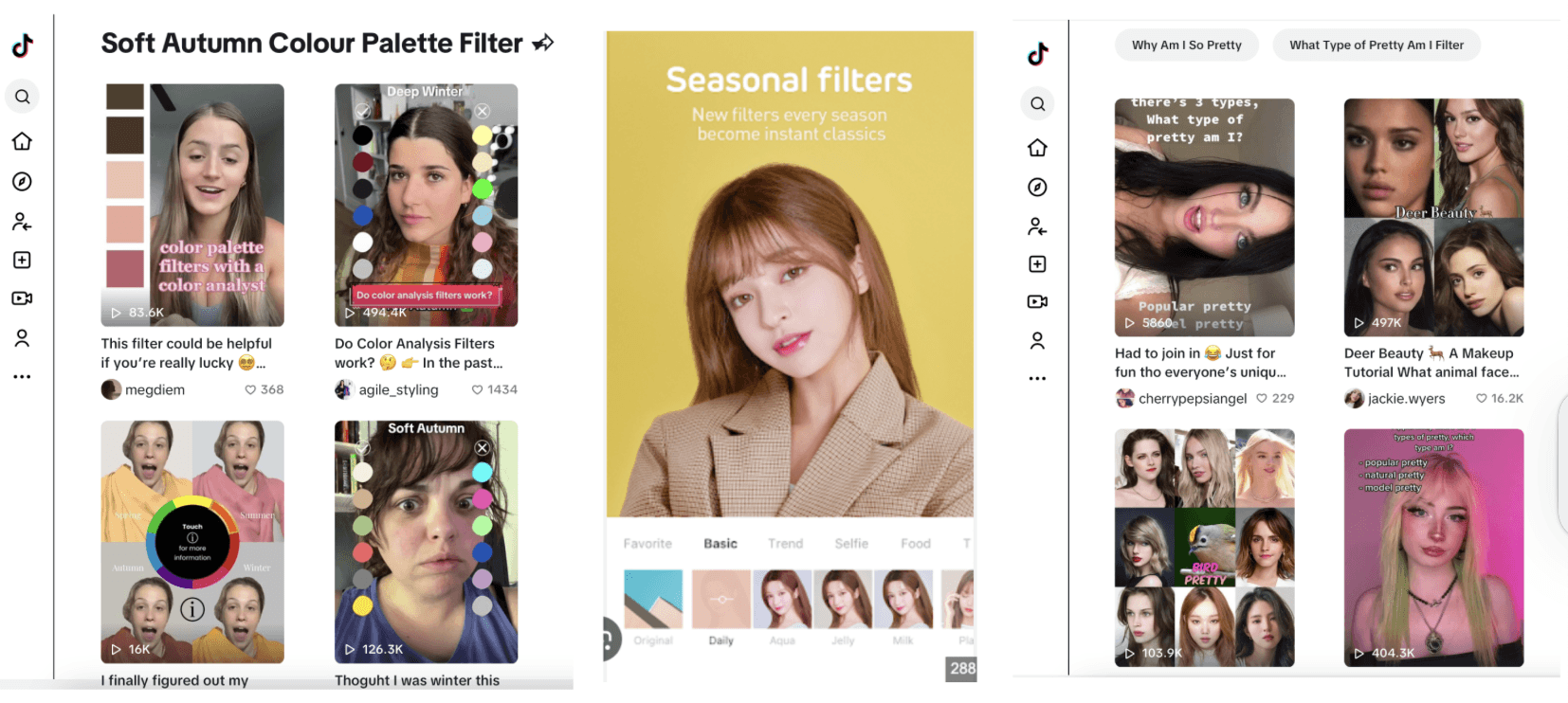
Existing filters on apps like TikTok or Snow provide tools for experimenting with colors and analyzing facial features. However, these platforms lack a comprehensive and accurate approach to help users truly understand their unique features and discover what suits them best, as the filters are designed to be generic rather than personalized.
User Interviews
Research Methods
1.) User Interviews- 4 participants
2.) Survey- 7 responses
3.) Card Sorting- 2 participants
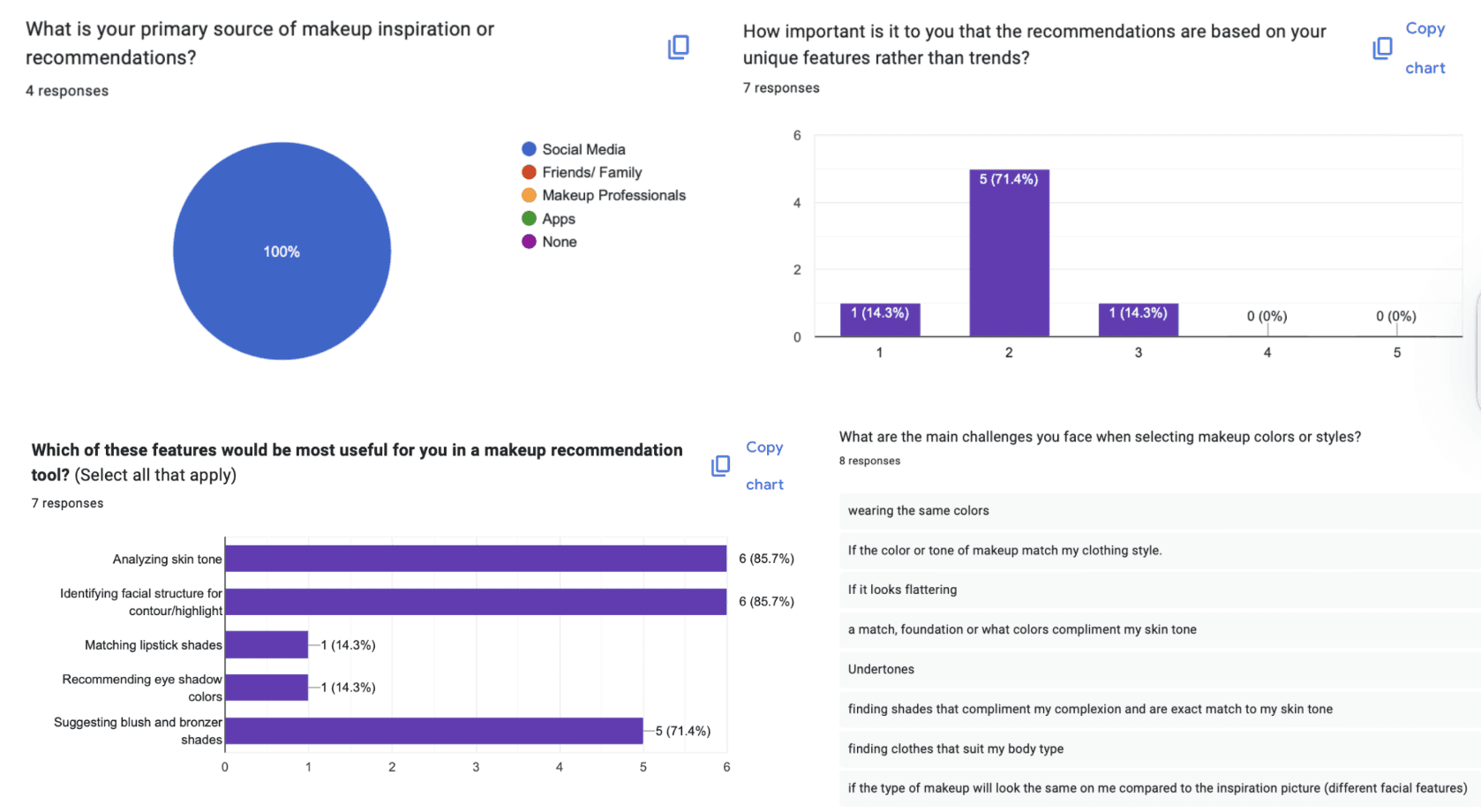
Key Findings
Action/Highlighted Moments Throughout the Design Process:
Mapped Existing Tools:
-Evaluated current beauty apps, social media platforms (e.g., Instagram, TikTok, Snow), and AR-based makeup try-on tools.
-Identified gaps such as reliance on fleeting trends, lack of personalized recommendations, and absence of comprehensive facial analysis.
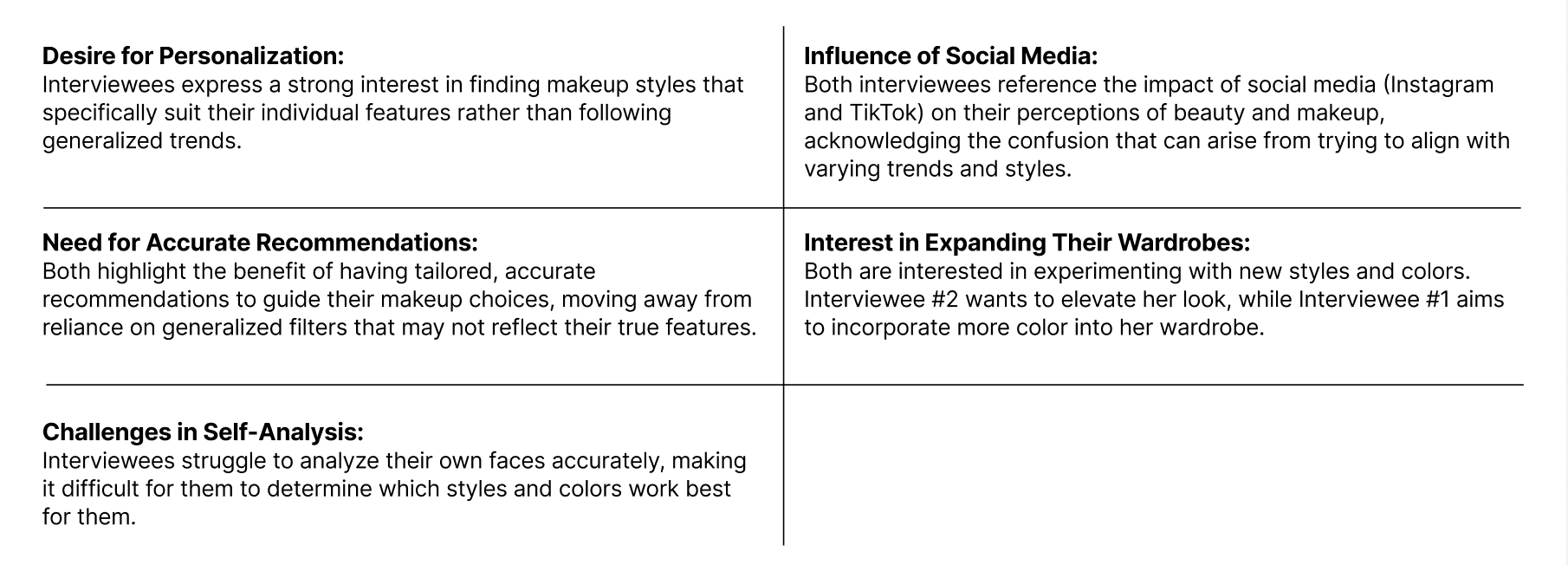
Insights from Research:
Desire for Personalization: Users want makeup suggestions specific to their skin tone, face shape, and preferences, rather than generic styles.
Influence of Social Media: Social media trends create confusion and pressure, but they also inspire experimentation.
Challenges in Self-Analysis: Many struggle to determine their best colors or makeup styles without expert guidance.
Need for Accurate Recommendations: Personalized, reliable suggestions would empower users to make confident choices.
Experimentation Interest: Users expressed enthusiasm for exploring new looks and elevating their everyday makeup routines.
Ideation: Generated concepts for a personalization, facial scanner, features page, make-up tutorials and products, and personalized sugugestions.
Ideation and Feedback
Suggestions for improvement:
Include recommendations for specific makeup looks (e.g., cat-eye, smoky eye) tailored to individual features.
Add event-specific suggestions (e.g., prom, date night, casual).
Allow users to upload their existing makeup collection for personalized advice.
Integrate a shopping feature to purchase recommended products directly through the app.
Theme Planning
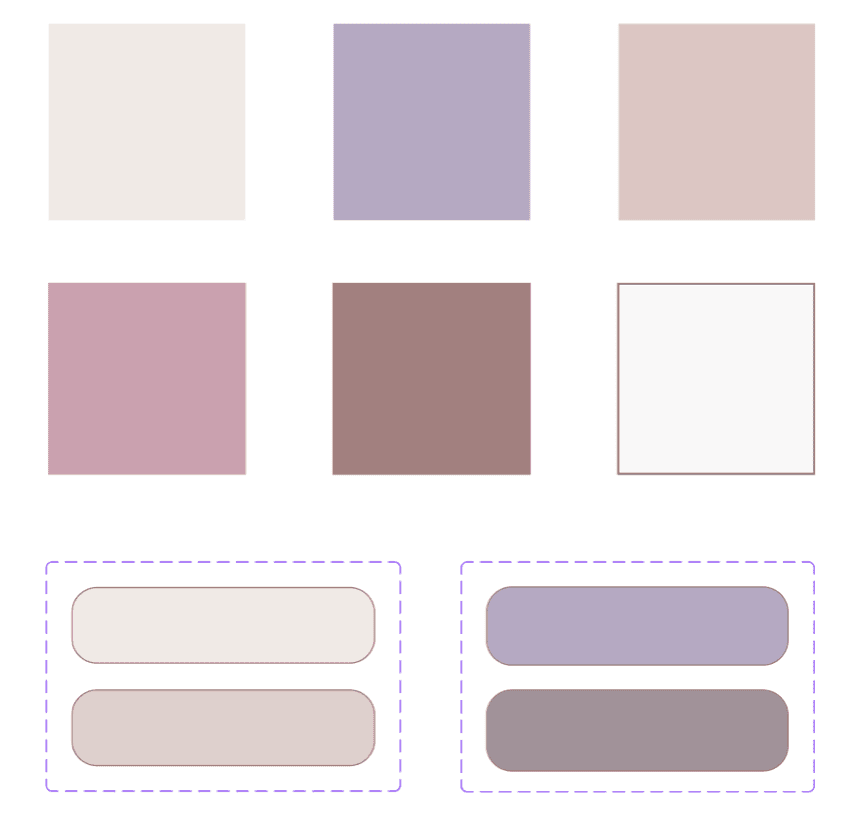
Color Story
The color palette of pink, beige, light purple, and brown were chosen to strike the perfect balance between minimalism and sophistication. Additionally, given the muted neutral tone of these colors, allows for the features and color insights on the app to be contrasted and complimented.
Pink adds a playful and cheerful vibe.
Beige offers a calming, neutral backdrop that complements the other colors.
Light purple brings a touch of whimsy and elegance.
Brown grounds the design, adding warmth and depth.These colors not only look pleasing individually but also blend seamlessly together, creating a harmonious aesthetic that's visually pleasing and comforting.
Logo
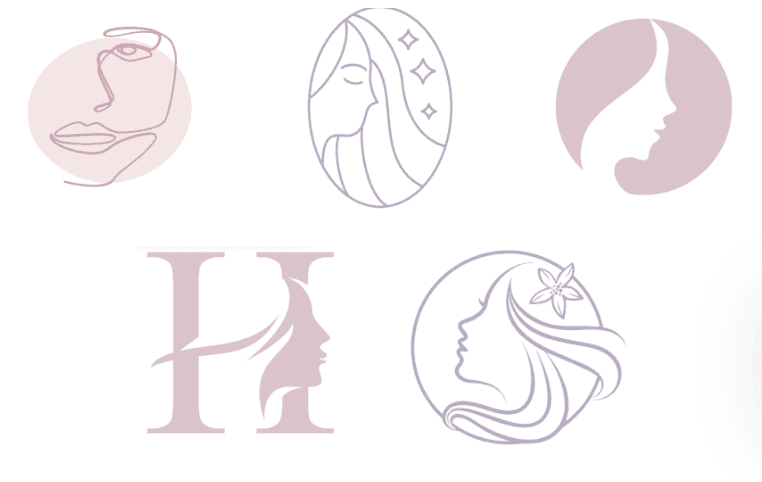
While brainstorming the app's logo, I wanted to feature a minimalist illustration of a woman's face, capturing the platforms theme of being a beauty tool and simplicity. These designs focus on clean, flowing lines that form the contours of the face or experimenting with white space.
This minimalism ensures the logo is timeless and versatile, while the choice of a woman’s face reflects individuality and central theme of the platform
Name
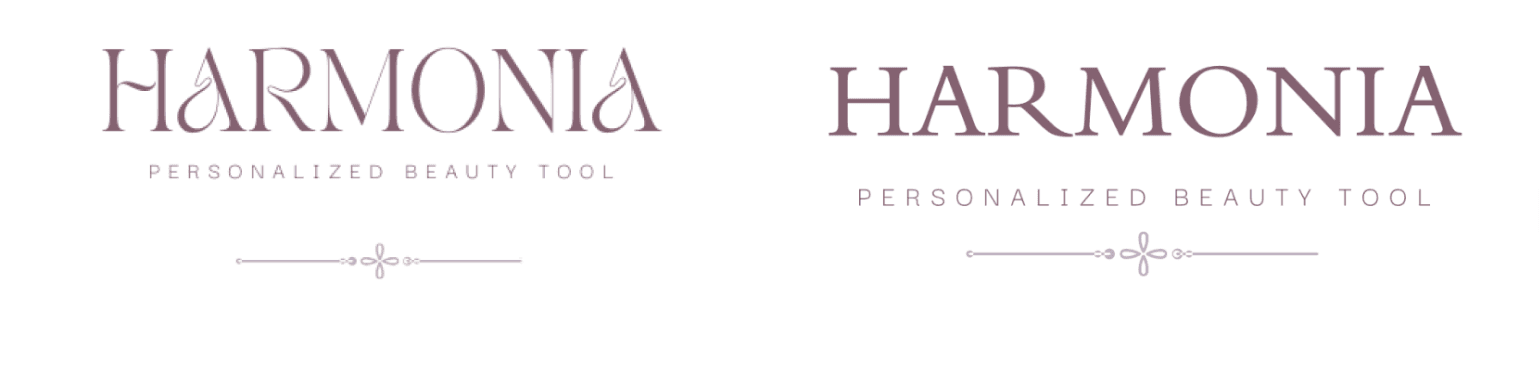
The name Harmonia draws inspiration from the Greek goddess of harmony and concord, symbolizing balance, beauty, and unity. This name aligns seamlessly with the app's minimalist and elegant design, creating a sense of purpose and timeless sophistication.
By channeling the goddess Harmonia, the app conveys not just style and simplicity, but also a deeper connection to the ideals of balance, beauty, and creativity — qualities the platform aims to emulate.
Prototyping
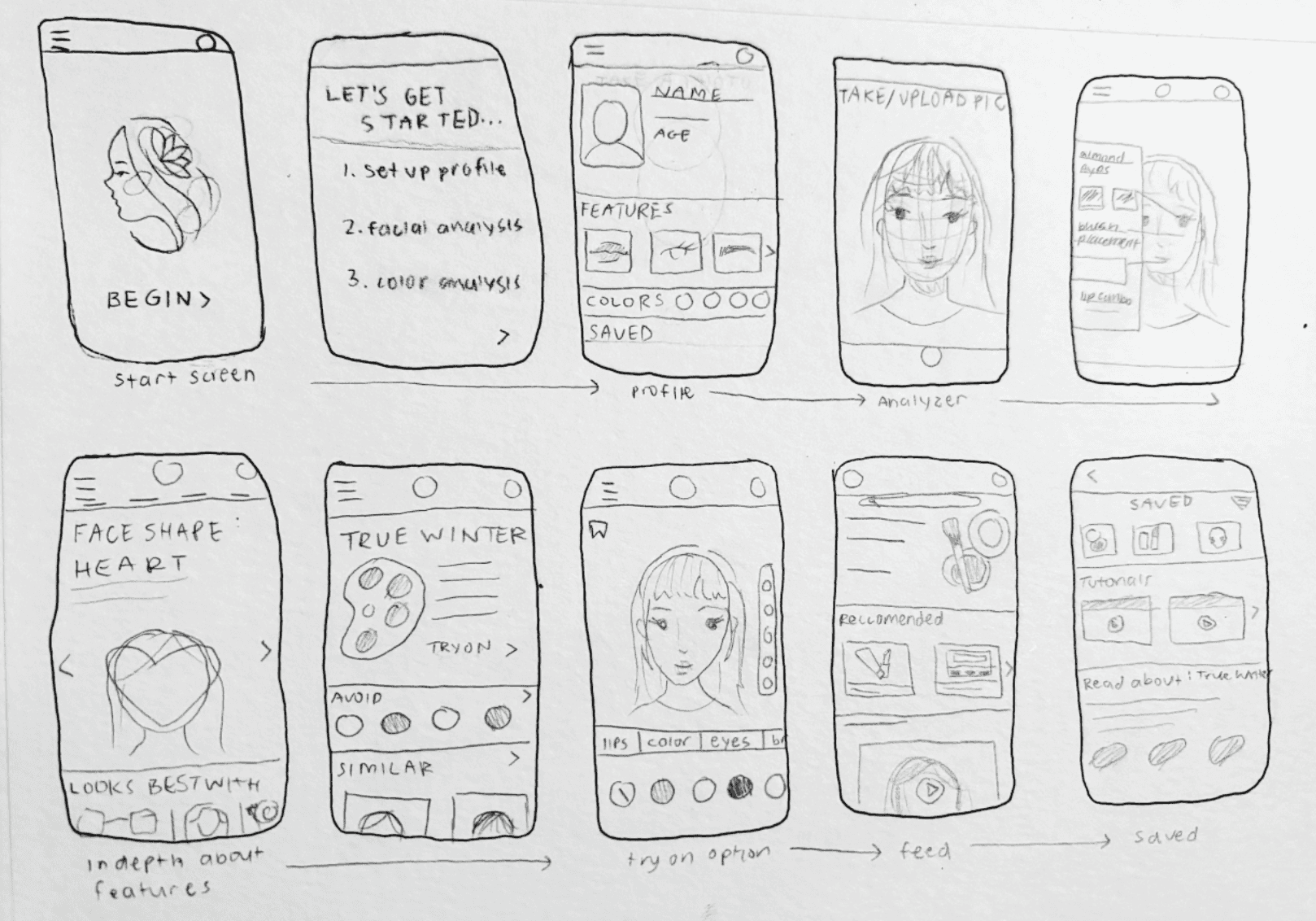
Low-Fidelity
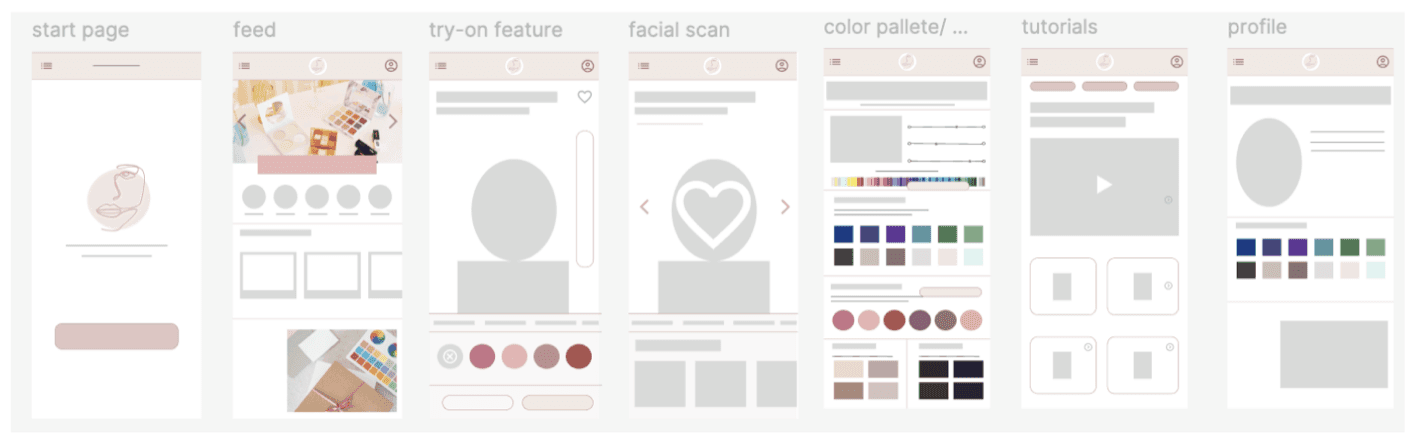
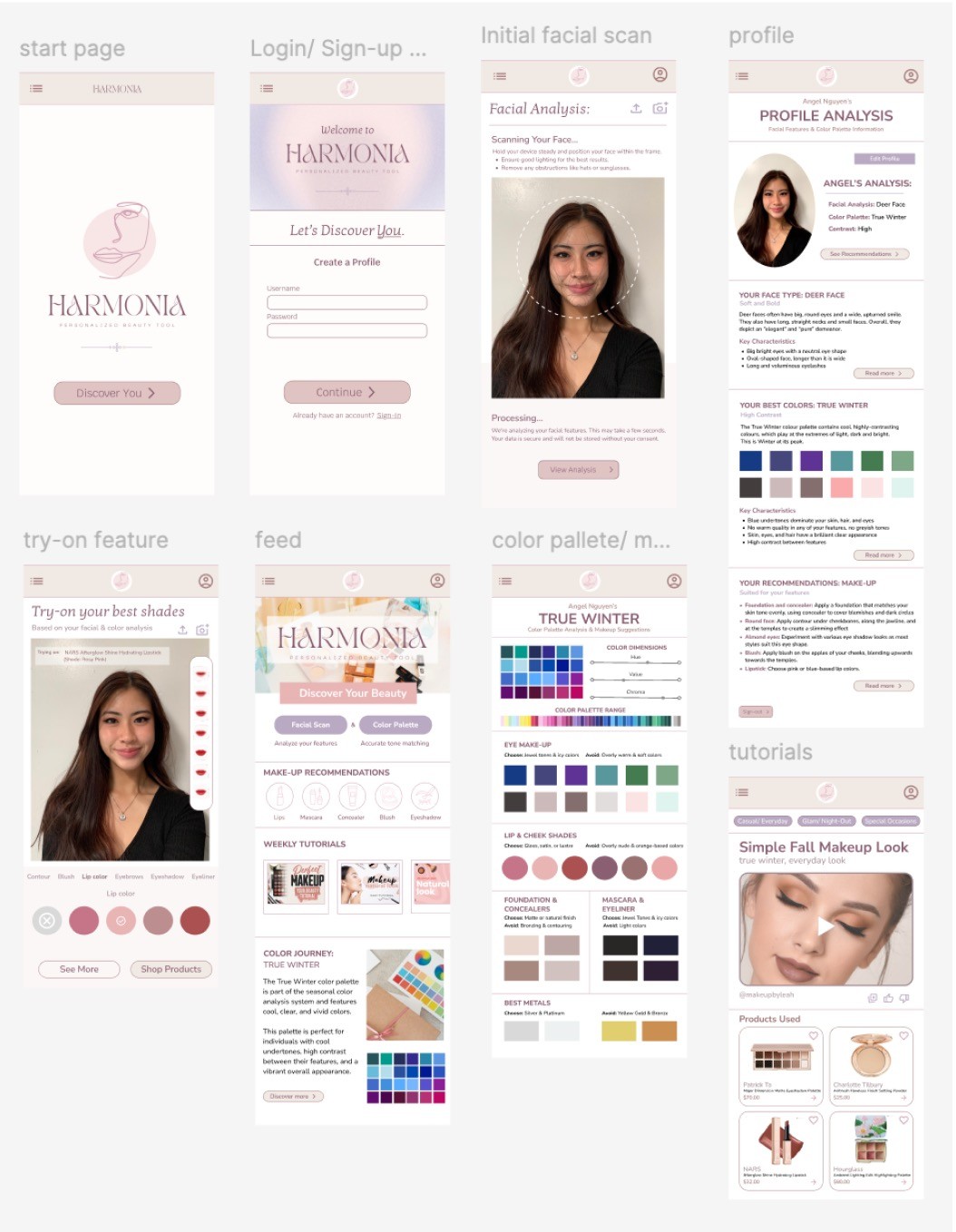
Designed a low-fidelity prototype to map out navigation flows across key app screens. Focused on usability by creating simple wireframes to test transitions and user interactions, ensuring seamless navigation early in development ot high fidelity.
Final Design
Results & Follow-up
The finalized design enabled users to receive tailored makeup suggestions in real time, increasing their satisfaction and confidence in product choices. Initial feedback highlighted the system's ease of use, accuracy, and ability to make users feel uniquely seen.