Plain Language Medical Dictionary (PLMD)
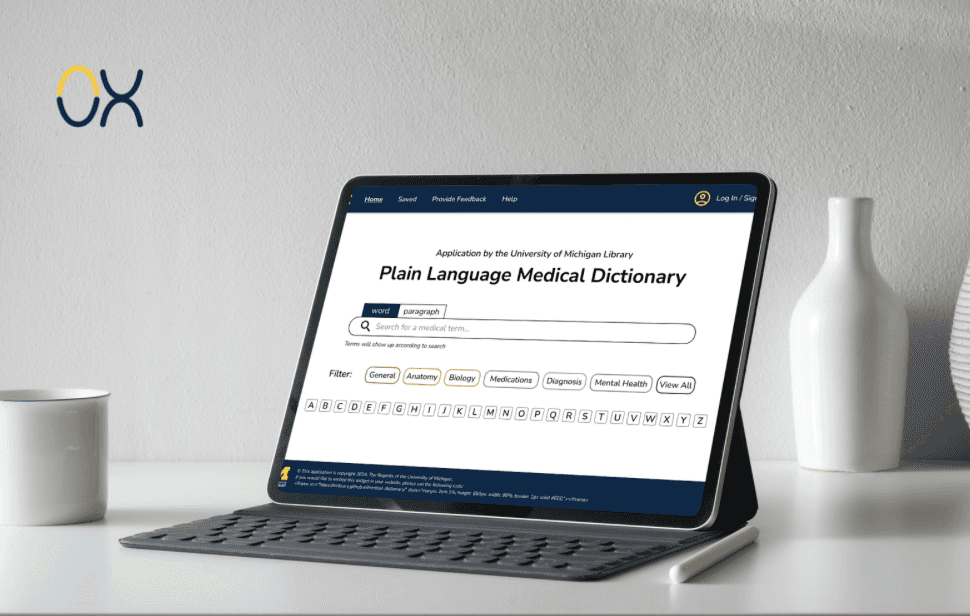
Redesigned the Plain Medical Dictionary (PLMD) interface to enhance accessibility, usability, and efficiency, focusing on users with low medical literacy
UI/UX
Redesign
Project Overview
Client: Taubman Health Sciences | University of Michigan
Organization: Michigan Open UX
Timeline: 8 weeks (2024)
My Role: Project Associate (2024) | Michigan Open UX
Team: Kate Chung, Amelia Zhang, Angel Nguyen, Sarah Nyaanga, Jocelyn Chiu
The Problem/ Context
The Plain Language Medical Dictionary (PLMD) serves as a critical resource for making medical terminology accessible to a broad audience, targeting those with low medical literacy. However, the current design and functionality present several challenges that hinder its effectiveness and user satisfaction. The client, Taubman, aimed to make the PLMD more accessible, useful, and efficient by redesigning the interface to better address user needs.
Task/ Objective
Redesign the PLMD interface to enhance accessibility, usability, and efficiency, focusing on users with low medical literacy. The redesign will focus on identifying key user pain points through interviews, content clarity, and overall user experience/efficiency.
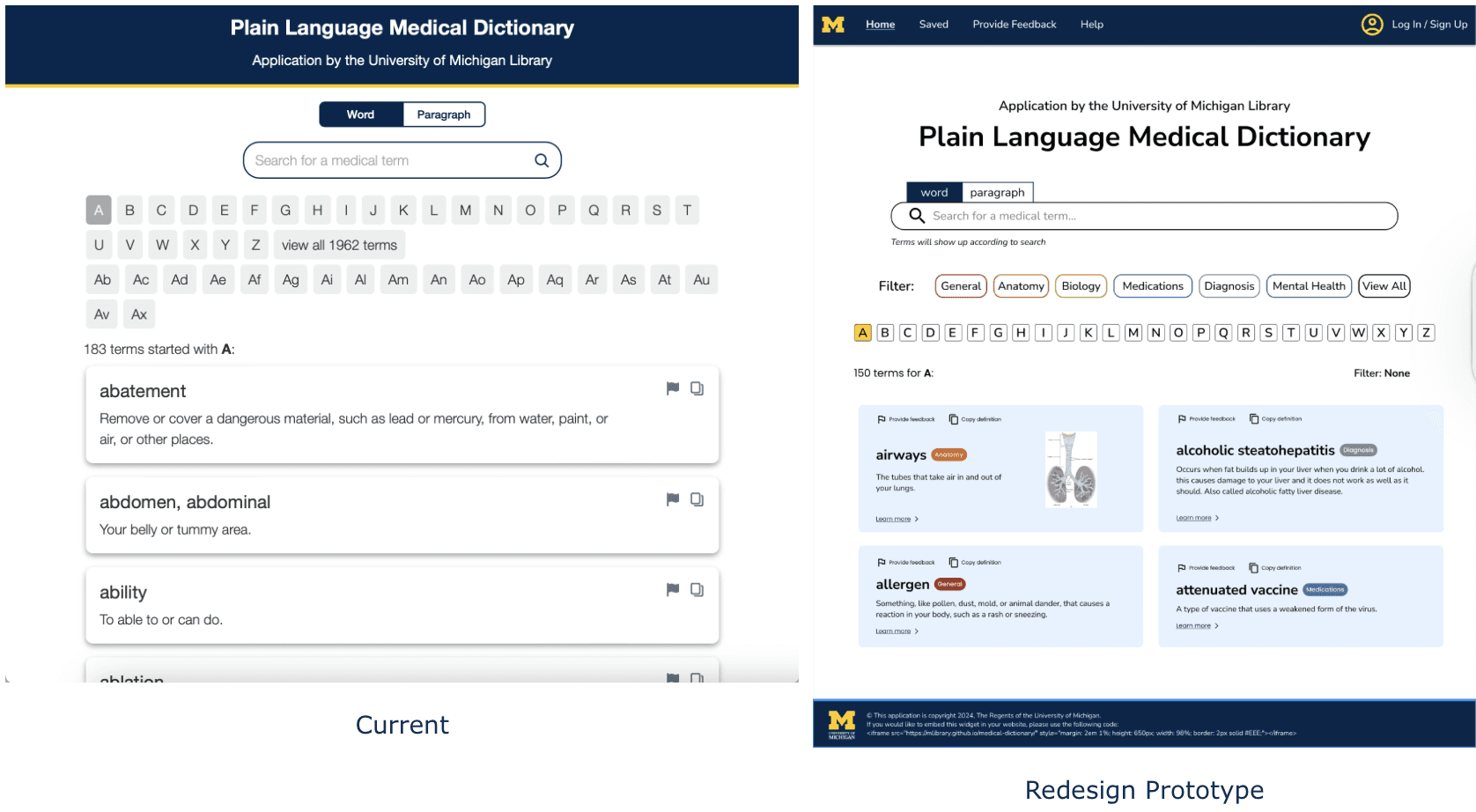
Redesign Comparison
User Research
The goal is to create an intuitive and user-centered platform that effectively bridges the gap between complex medical terminology and the needs of a broad audience.
To achieve this, we conducted a total of 12 user interviews to identify pain points and gather insights on improving navigation, content clarity, and overall usability of the current PLMD.
8 discovery
3 clinicians
5 patients
4 usability tests
In our interviews, we targeted definition comprehension and effectiveness as well as the benefits for imagery. We also created wireframes and a prototype that consolidated our interview findings into a version that suited our users’ needs.
Interview Findings
Current Terms in PLMD
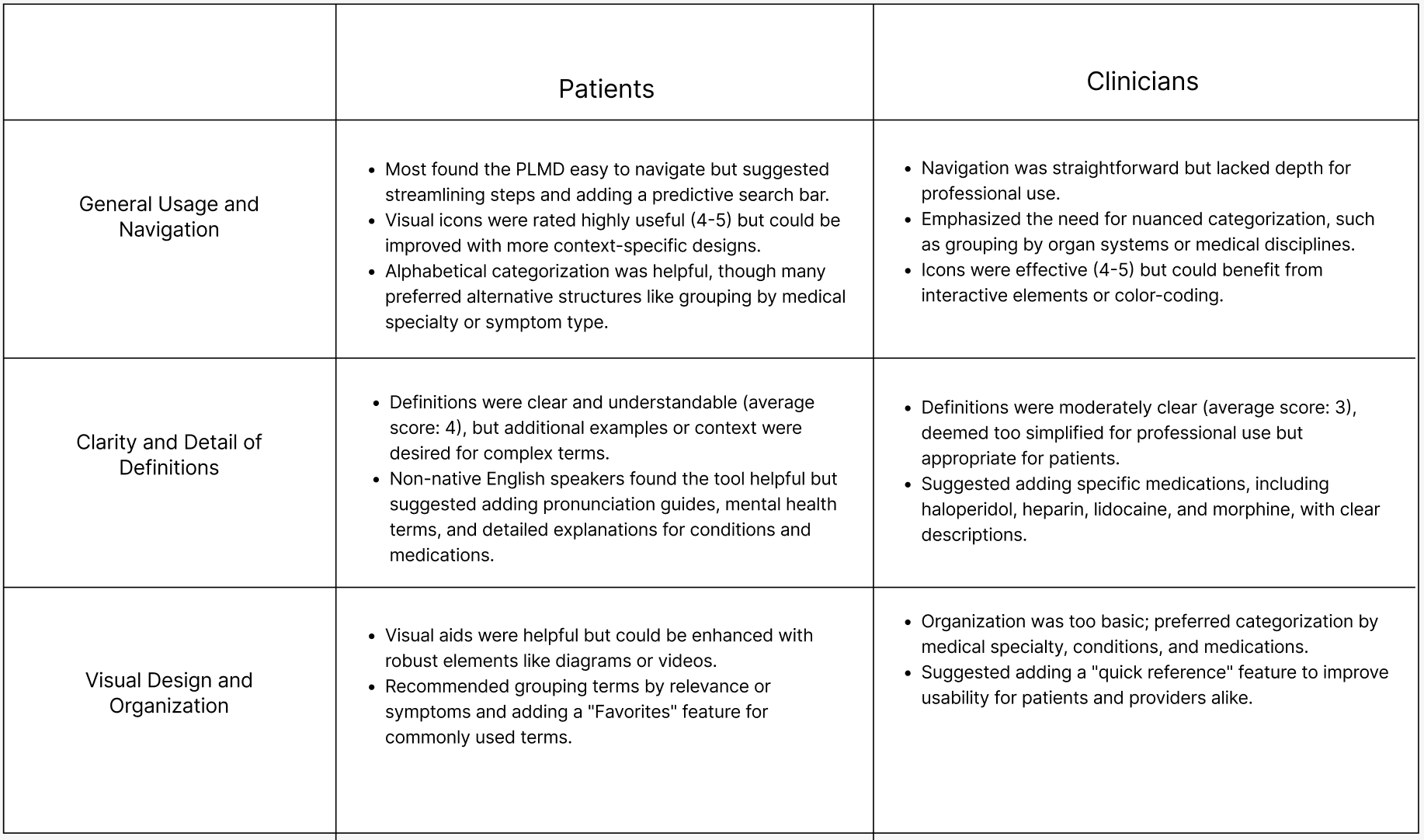
We have found that a majority of interviewees found the current definitions to be well understood and digestible
However, there were commonly used medications that were not present in the dictionary:
Haloperiodl- typical antipsychotic for schizophrenia, hallucinations, delusions
Heparin- anticoagulant injection- decrease clotting ability of blood
Lidocaine- anesthesia, relieve pain and numb the skin
Morphine- treatment for pain
Some participants felt that some terms related to weight (ie. diabetes) may come across as offensive
Some words were not the correct medical terminology
“Breastfeeding”
Some search results were irrelevant to search (ie. “organ”)
Some terms varied in linguistic complexity: mentioned in definitions that are also found in the dictionary were difficult to understand
Also, in order to understand what the other medical terms meant, they had to manually search for them, which took extra steps

Imagery
Our interviewees have placed emphasis on the effectiveness of pictures, and all expressed that it would aid their understanding and awareness of the terms
Design Process
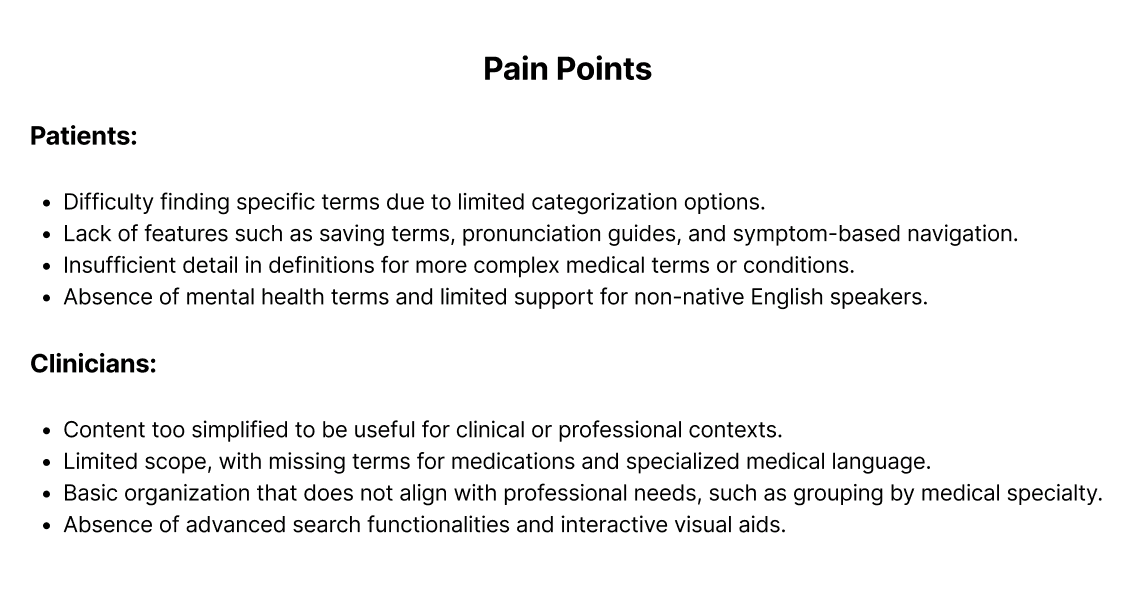
Including URLs within term definitions for more information/media of the terms if they want to learn more than just “what is it”
Categorizing terms based on their medical association (medication, mental health, anatomy) and possibly even further (cardiovascular, respiratory, etc.)
Navbar
Labels on each term
Instructions on how to use the PLMD in the homepage
Make other terms defined in the PLMD easily accessible within definitions
Logging in and out to save and quickly refer back to terms
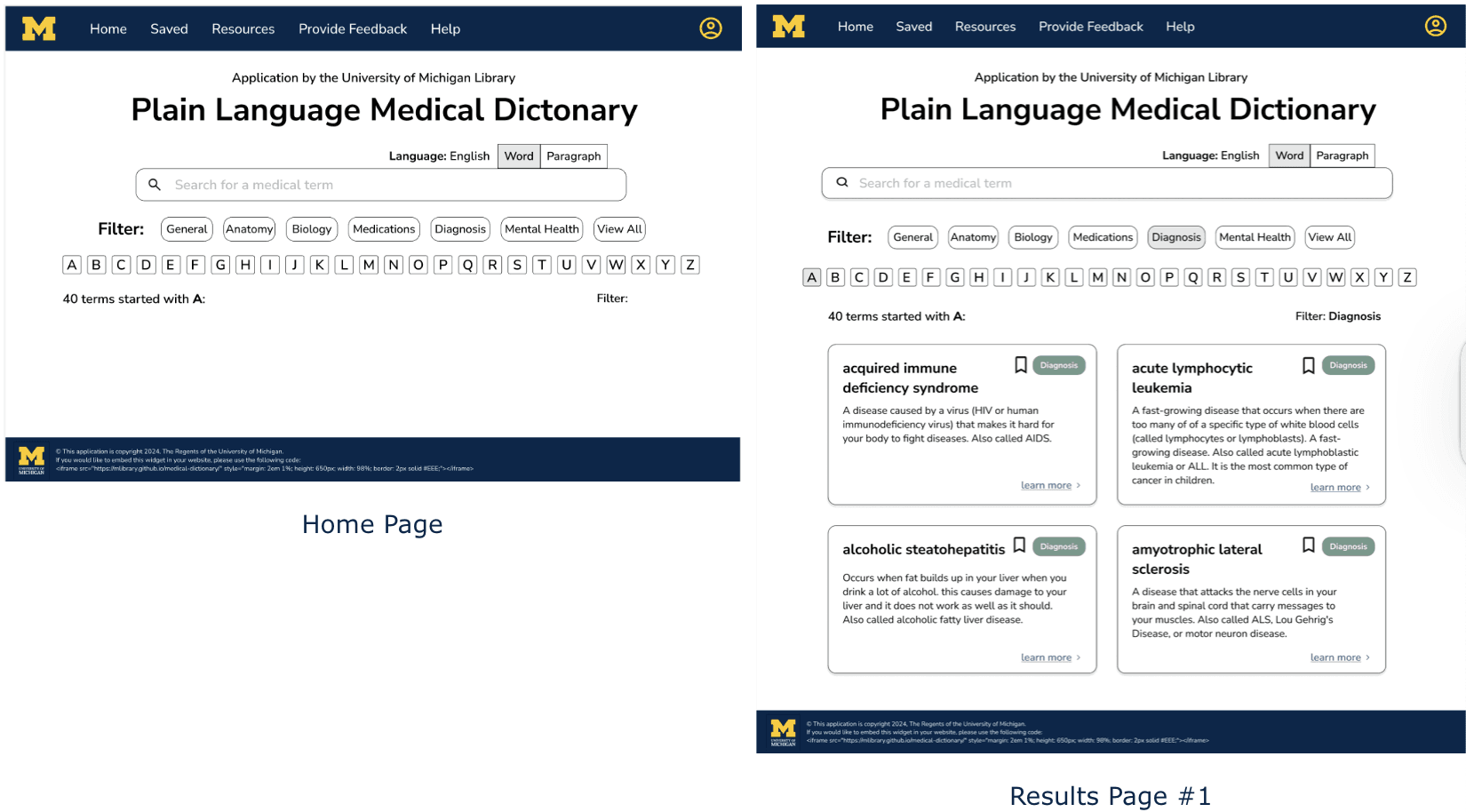
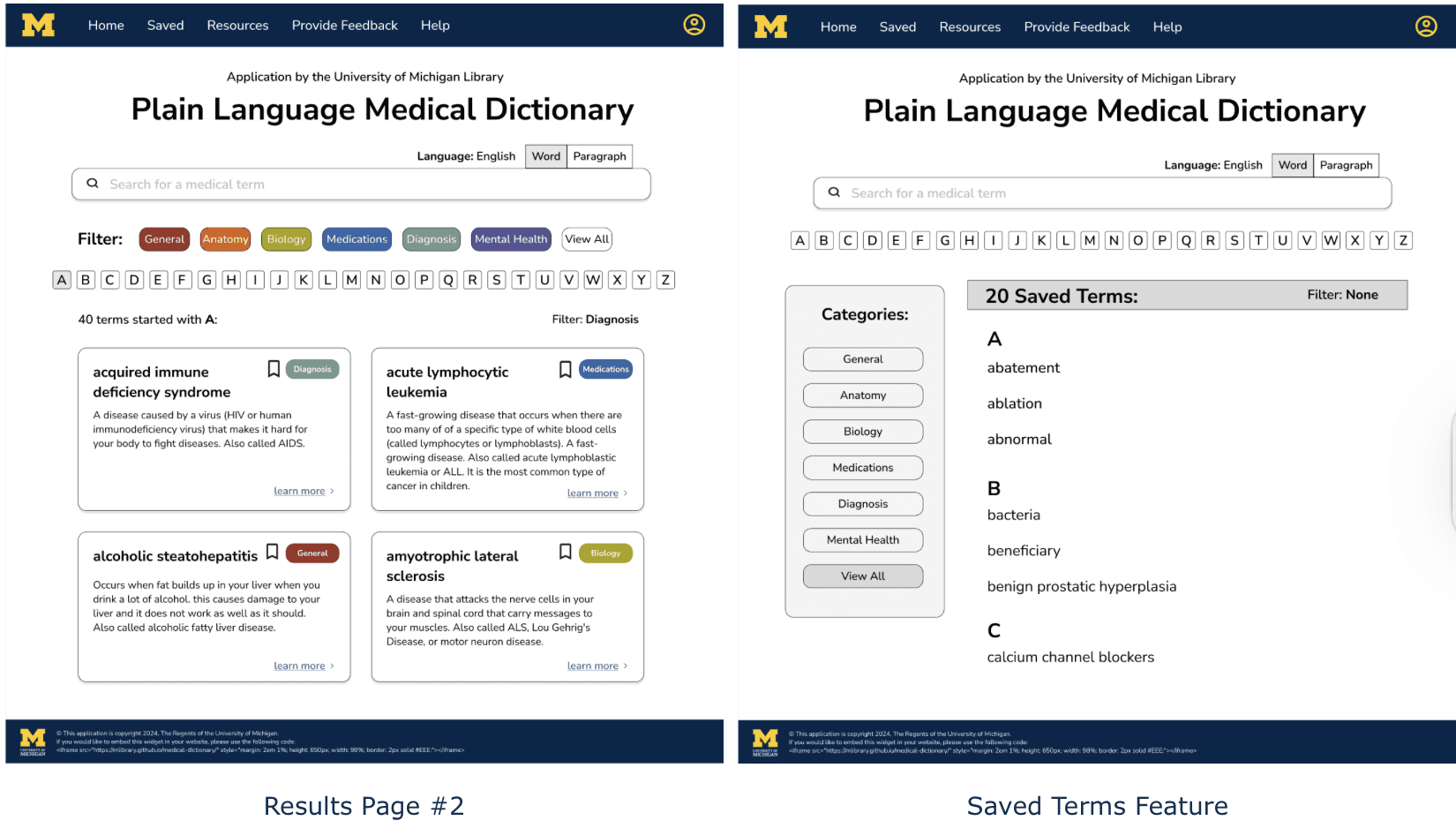
My Wireframe- Angel
Usability Testing & Feedback
Users appreciate the navigation bar, categorized terms, and A-Z display on one line for clarity.
The "Learn More" button is intuitive and enhances access to additional information.
Alphabetized and categorized saved terms improve organization.
The redesign encourages exploration by clearly showcasing site capabilities with intuitive options and buttons.
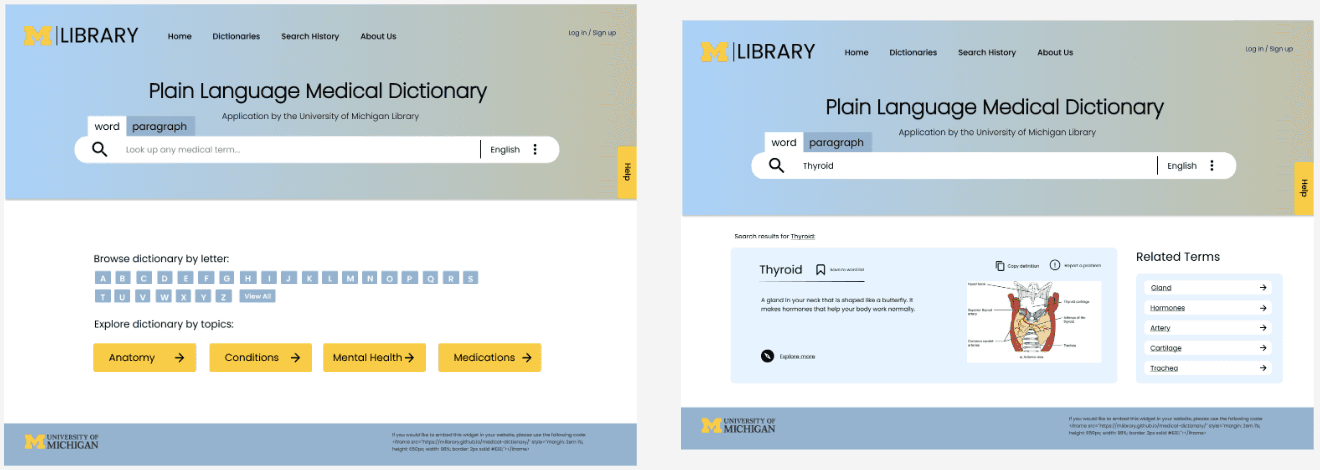
Other Associate's Prototypes
Wireframe 1- Kate

Wireframe 2- Amelia
Final Prototype
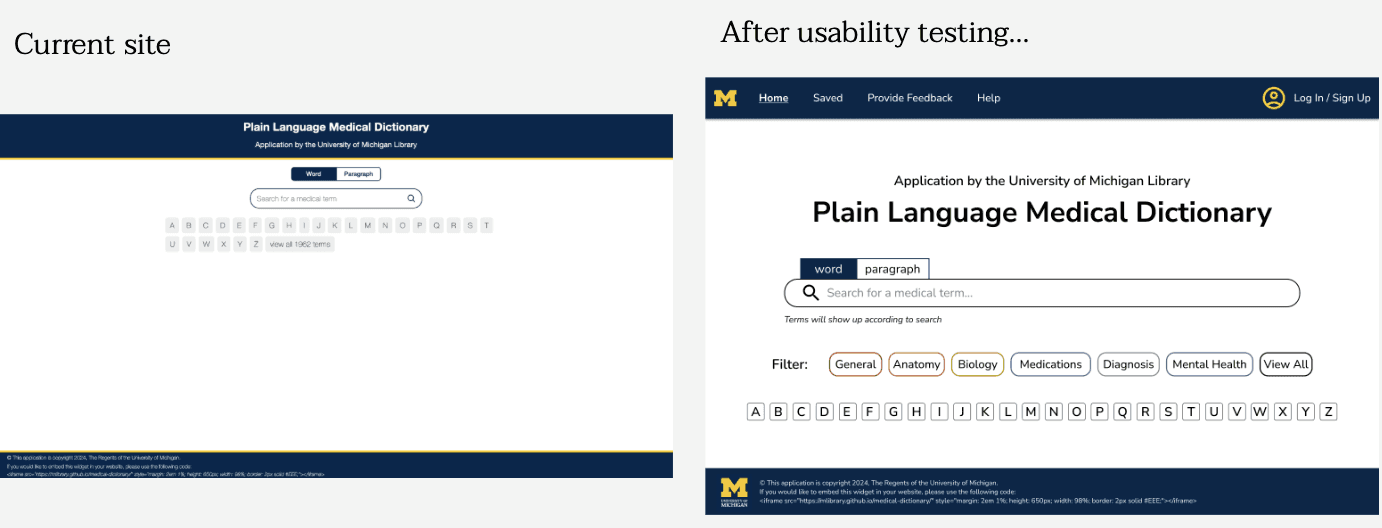
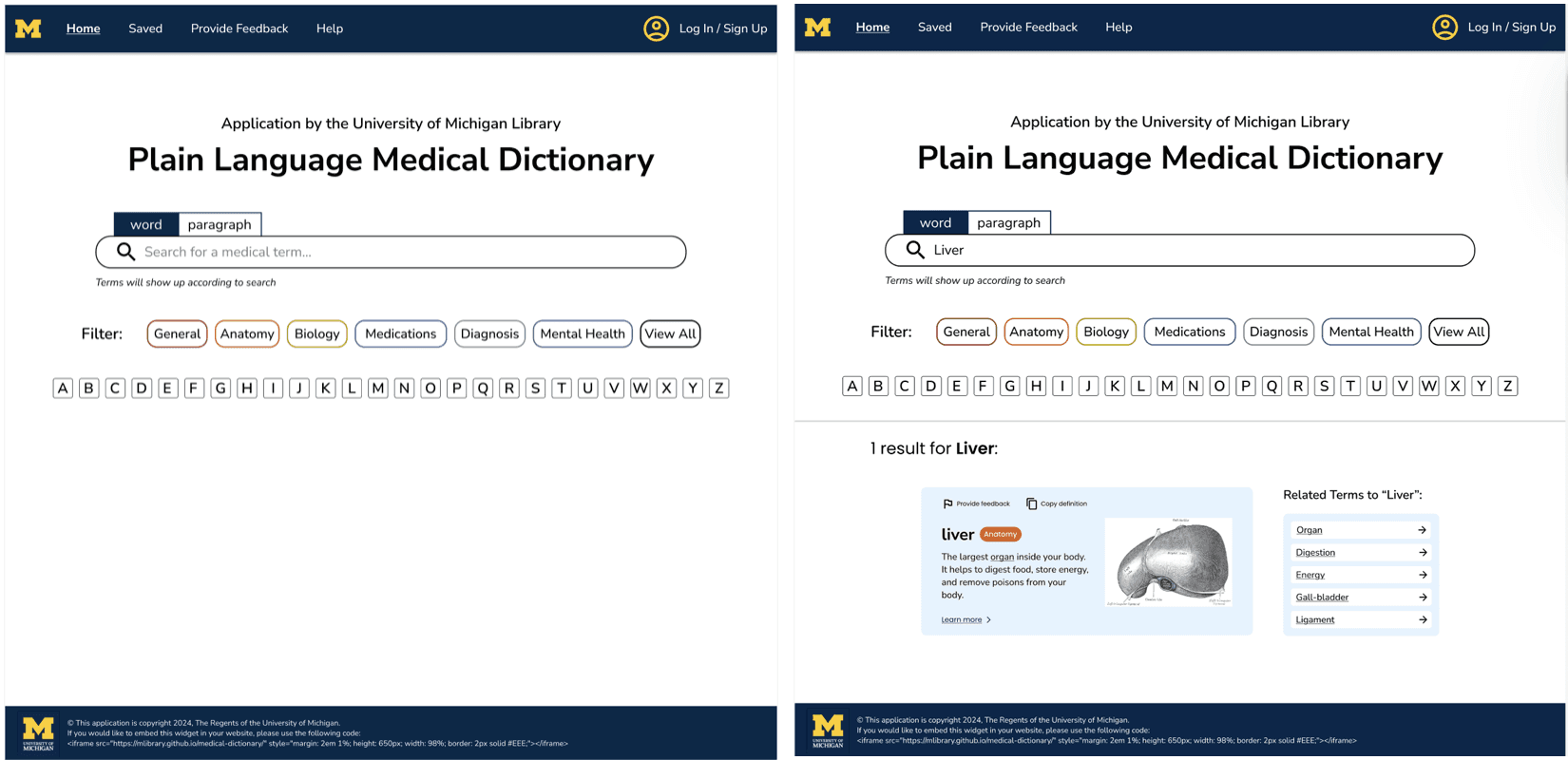
Design Decisions
Integration of Feedback & Features
Enhanced Navigation & Organization – The navigation bar and categorized terms improve accessibility and searchability.
Clear & Intuitive Layout – A-Z terms on one line enhance clarity, and the "Learn More" button provides easy access to additional details.
Encouraging Exploration – Intuitive buttons and extended options help users navigate and discover the platform’s full capabilities.
Toggle Search & Results Feature

Color-Coordinated Search Results – Terms in search results are highlighted with their respective category colors, improving scanability and organization.
Categorized Terms with Color Coordination – Terms are now grouped into categories, each distinguished by color, making it easier for users to visually identify related/ different results.
"Learn More" Feature – Users can access additional details about each term through an intuitive "Learn More" button, improving engagement and information depth.
Feedback & Interaction – A feedback option allows users to provide input on definitions, ensuring continuous improvement and accuracy.
Copy Definition Option – Users can quickly copy definitions for easy sharing and reference.
Improved Hierarchy & Accessibility – Definitions are structured with clear visual hierarchy, enhancing readability and accessibility.
Identifying Terms: Paragraph Feature
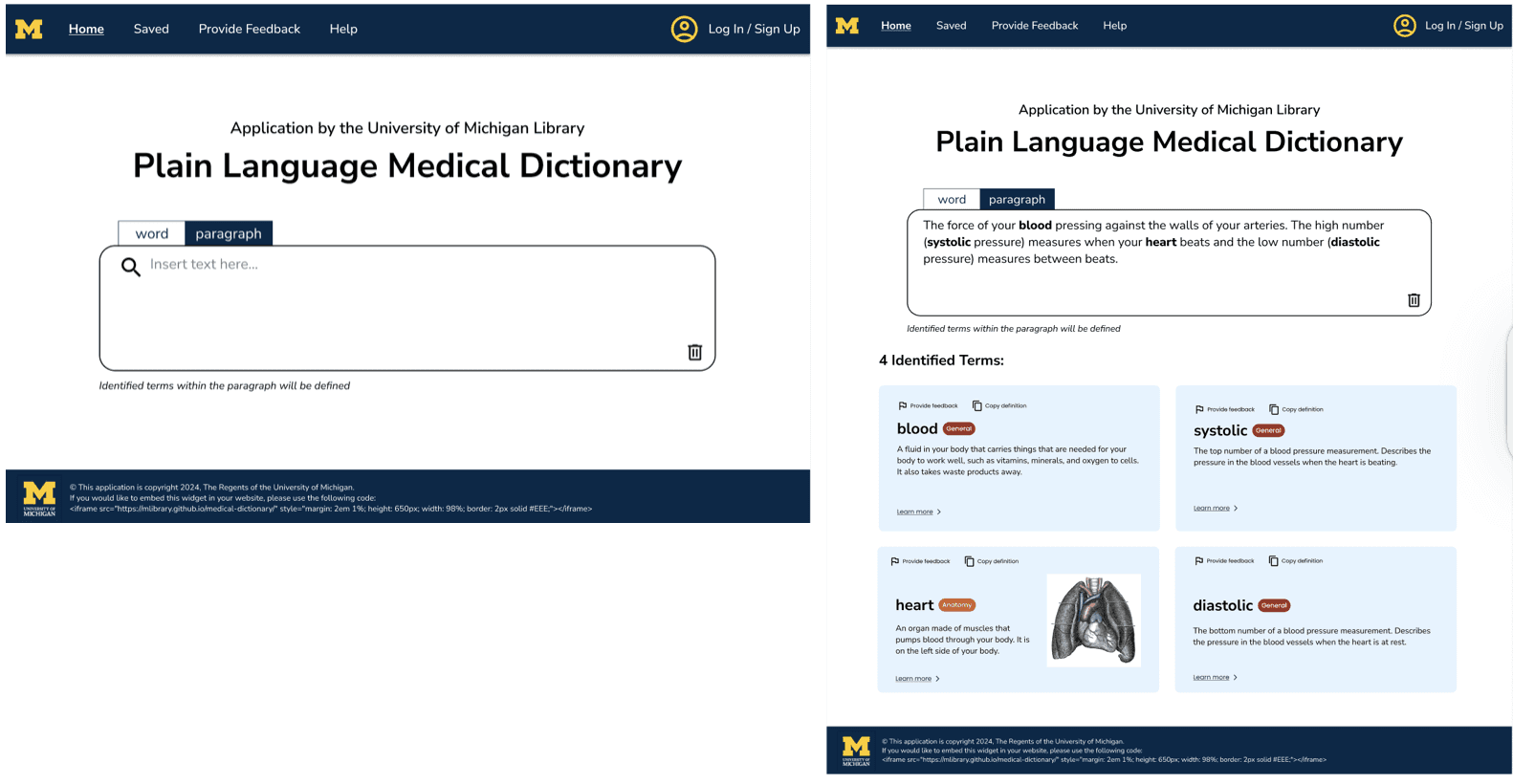
Key terms within paragraphs are now highlighted and displayed below for quick reference and better readability. Additionally, a trash icon is placed for convenient paragraph deletion.
Results & Follow-up
The PLMD serves as a valuable resource for patients seeking to understand medical terminology, with clear opportunities to enhance its usability and scope. Further recommendations include expanding the dictionary’s content, improving categorization and navigation, and incorporating more robust visual and interactive elements to better meet the needs of both patients and clinicians.
After presenting with the client, Taubman College, this prototype will be used as a reference in the development and improvement of the future PLMD website!